HIGHLIGHTS
KIMISHIMA Arisa: She Believes in Her Own Potential and Continues Her Journey in Track and Field
HIGHLIGHTS
KIMISHIMA Arisa: She Believes in Her Own Potential and Continues Her Journey in Track and Field

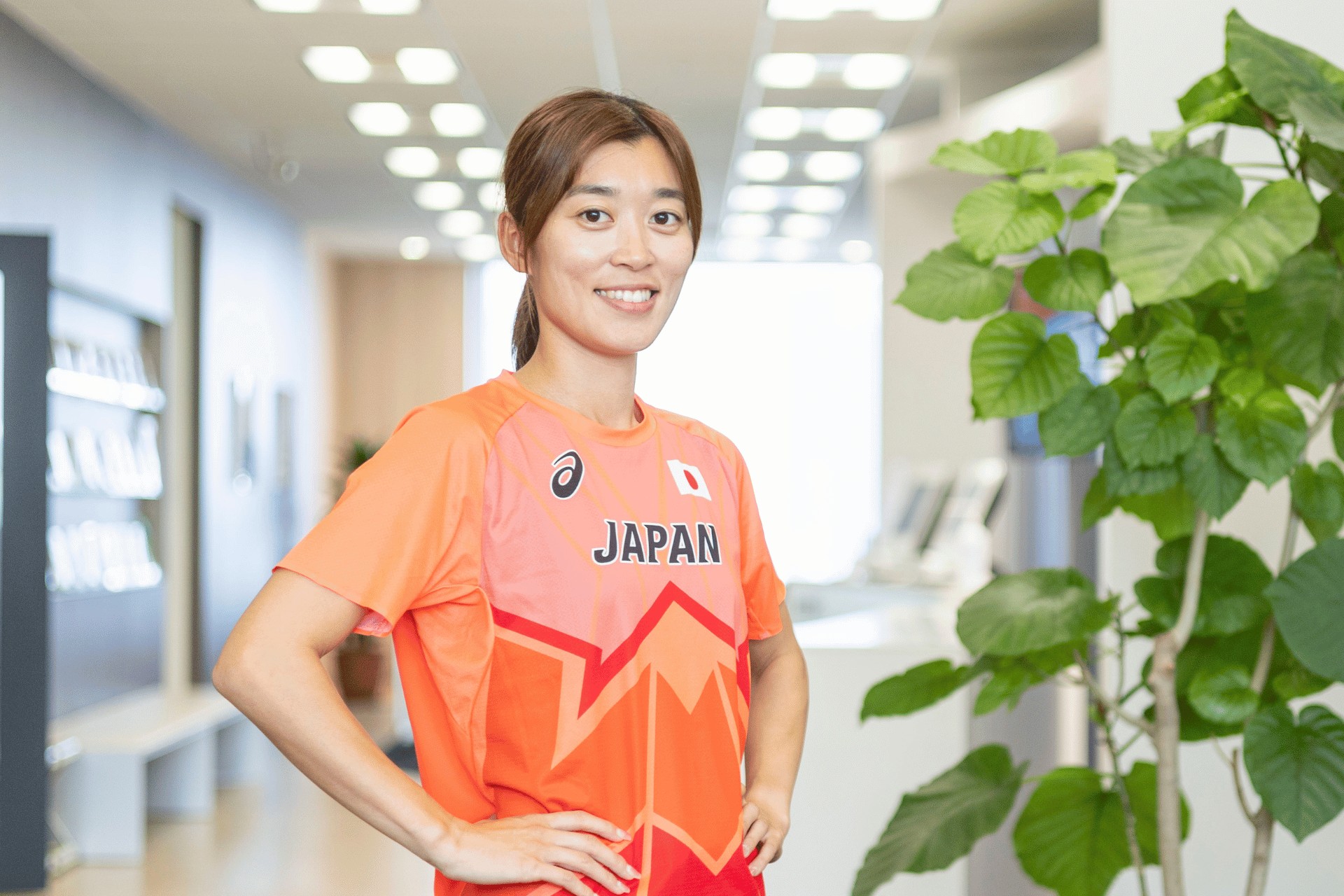
Arisa Kimishima is one of the leading figures in Japanese women’s sprinting, having won the Japanese Athletics Championships in the women’s 100 meters three times in a row. She also has experience as a member of Japan’s national bobsleigh team and competing at the World Championships, where she finished seventh. We spoke with Ms. Kimishima about her passion for competition, her experience challenging herself in both summer and winter sports, as well as her future goals. In addition, we asked her what sightseeing spots she recommended.
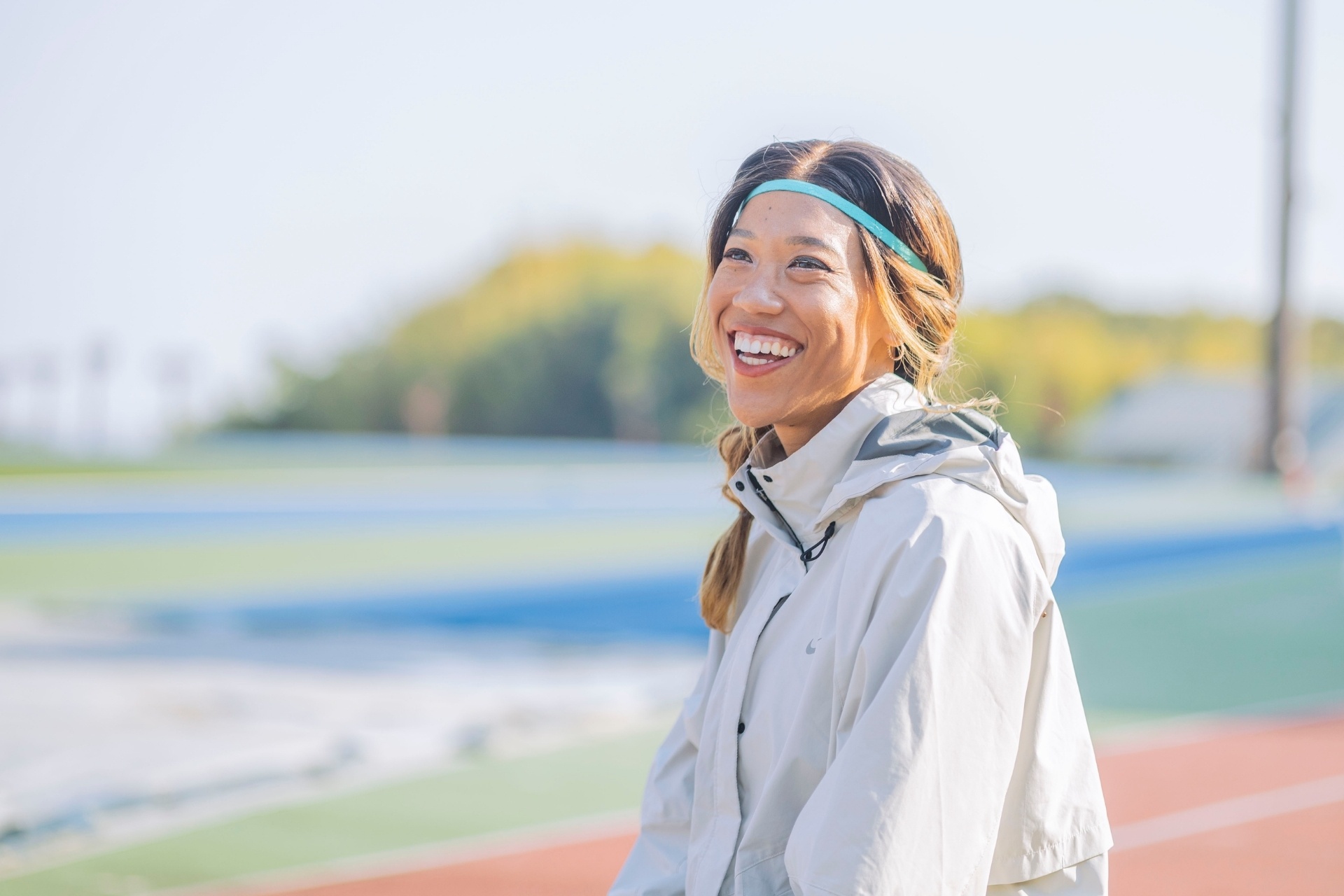
I heard you started track and field in junior high school.
“When I first entered junior high school, I actually wanted to join the tennis club. I wanted to try wearing a cute skirt. It was a very simple reason, and maybe I was just chasing a trend… But the tennis club was very popular, with a lot of applicants, and I felt it would be difficult to become a regular member. Around that time, the coach of the track and field club asked me if I would like to try track. Apparently, I had attracted some attention because in elementary school, during a sports fitness test, I ranked first in Yamaguchi Prefecture in the long jump, and I was also a fairly fast runner. I thought it might be a good idea to try my hand at something I was good at, so I decided to join the track and field club.”
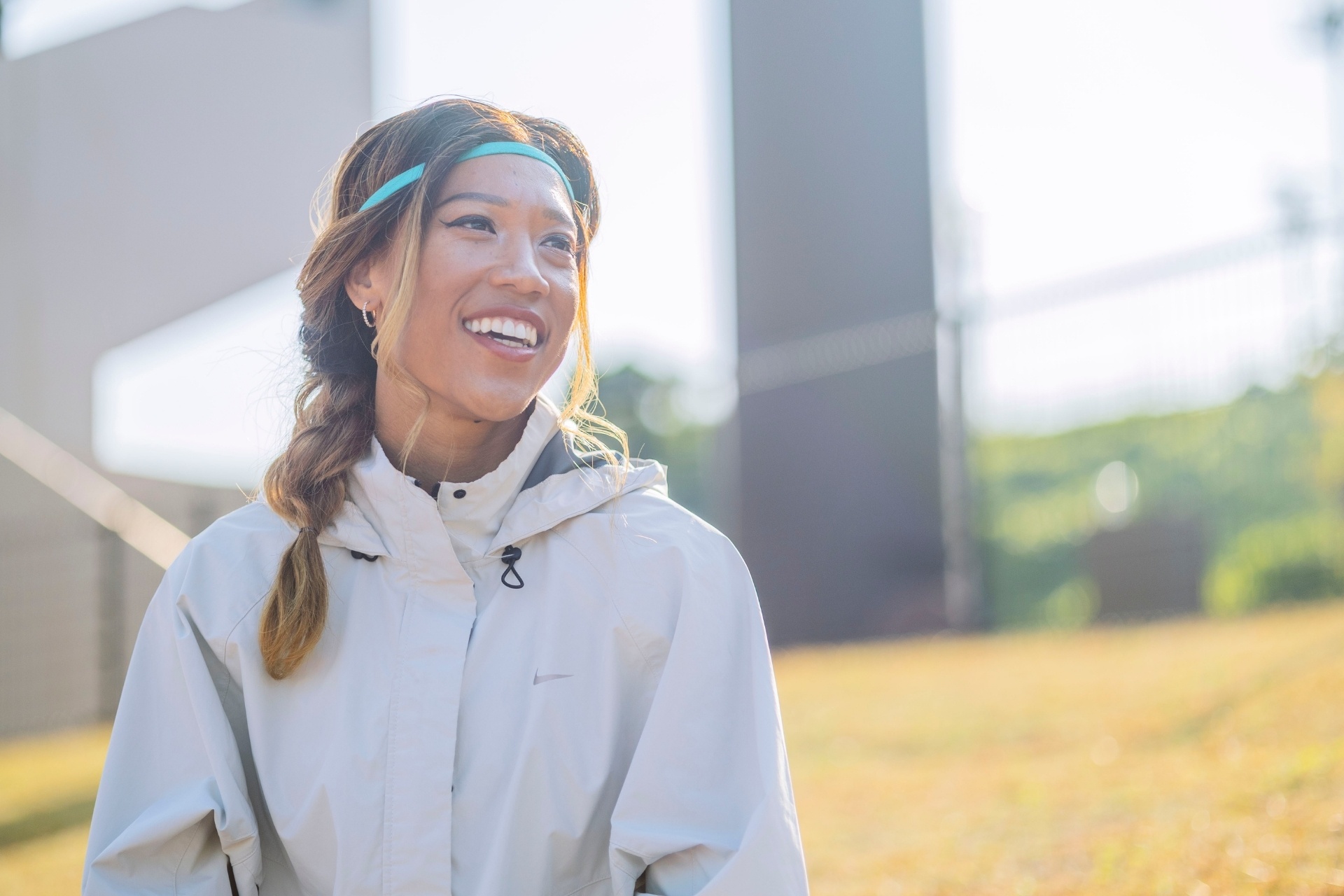
You quickly demonstrated your ability by setting a junior high school record in the girls’ 200 meters at the All-Japan Junior High School Championships. Even today, you’re still competing at the highest level, so what do you find most appealing about track and field?
“Especially in the 100 meters, the race is decided in just a little over ten seconds, and that heart-pounding, edge-of-your-seat feeling is part of what makes it so exciting. That’s something spectators also find appealing, right? For us as athletes, we train every day for that single, fleeting race, building our bodies and refining our techniques while constantly thinking about how to shave off even fractions of a second. Even though the race itself is over in an instant, each athlete has their own story, their own feelings, and their own supporters who cheer for us and support us along our journey. All of that gets condensed into those mere ten-plus seconds. I feel a profound depth in the sport precisely because of that simplicity.”
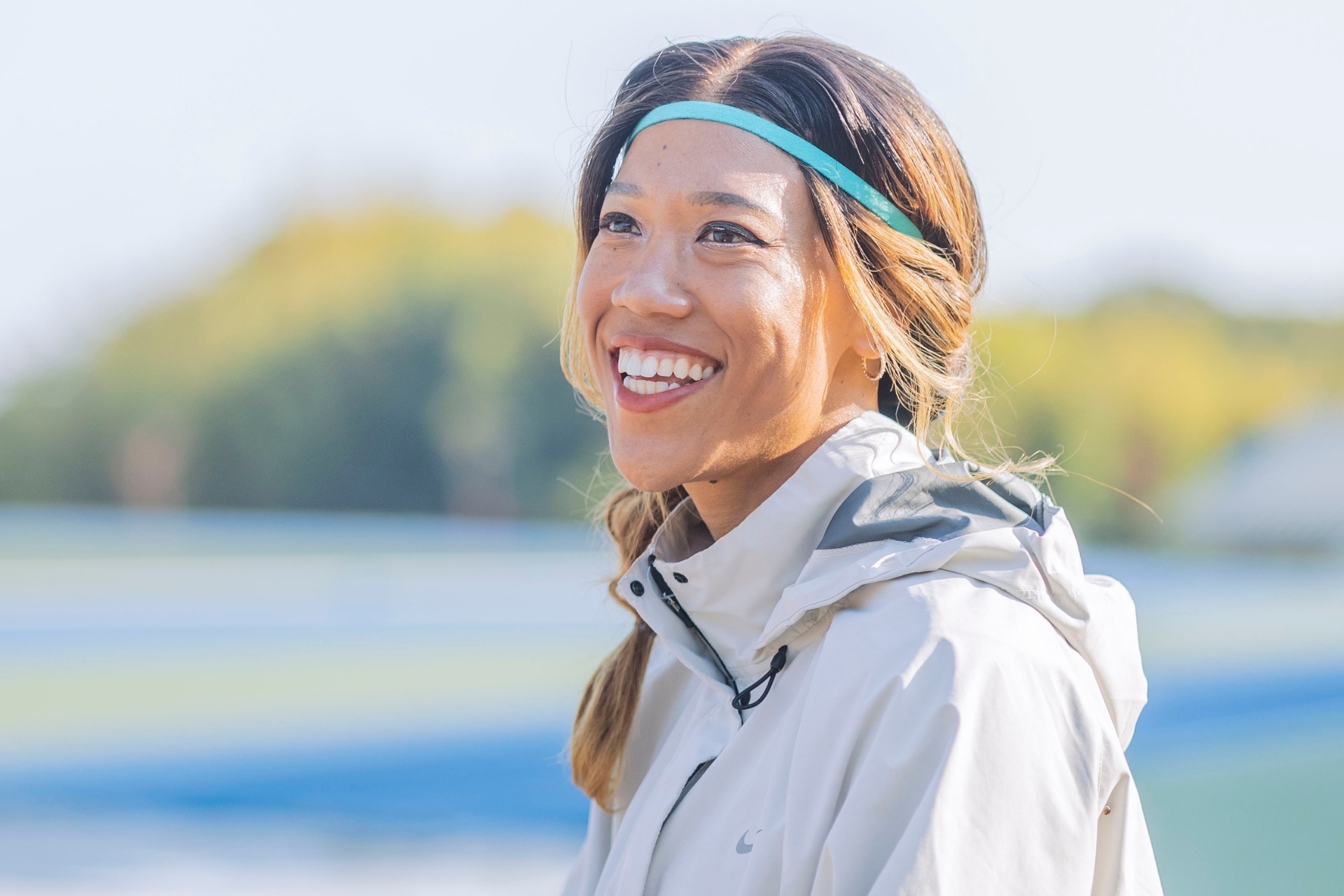
Leaving your hometown of Yamaguchi Prefecture, you went on to attend Saitama Sakae High School, a powerhouse in track and field. Then at university, you also competed as a bobsleigh athlete.
“I first encountered bobsleigh in my third year of university. My coach saw a poster about tryouts being held to discover new talent and suggested that I give it a try. At the time, I had been struggling with injuries and wasn’t able to achieve the results I wanted, so I thought it was worth trying, feeling that the power and speed required for bobsleigh might also serve me well in track and field.”

That said, did you have any familiarity with winter sports?
“I was raised in Yamaguchi Prefecture, so I’d never had the chance to experience snow at all. But just like when I started track and field in junior high school, whenever someone encourages me, I develop this mindset of ‘Let’s just give it a try!’ Before deciding anything, I want to give it a try. So I tried out—and to my surprise, I passed! Two or three weeks later, I went to Germany, and, for the first time got on a sled and went down a course. I was shocked by the speed and the feeling of gravity, which were far beyond what I had imagined. You go down at around 130 kilometers per hour, and about six times your body weight in G-forces hits you, so when you finish and get off the sled, your legs are wobbling and you feel like a newborn fawn (laughs). Even though I was a complete beginner, I somehow managed to win first place at the European Cup just one month later.”
After that, you also competed in the World Cup and finished seventh at the World Championships just four months after taking up the sport. It’s an impressive achievement.
“Thank you. For me, what meant even more than the results themselves was the joy of meeting and interacting with so many athletes from different countries around the world. In bobsleigh, we have to carry our sleds ourselves, and they weigh around 170 kilograms. Regardless of nationality or team, athletes help each other out, and sometimes even lend and borrow each other’s equipment. There are so many opportunities to interact like that. It was all so very fresh and enjoyable. By opening a new door, I felt as though my world suddenly expanded.”
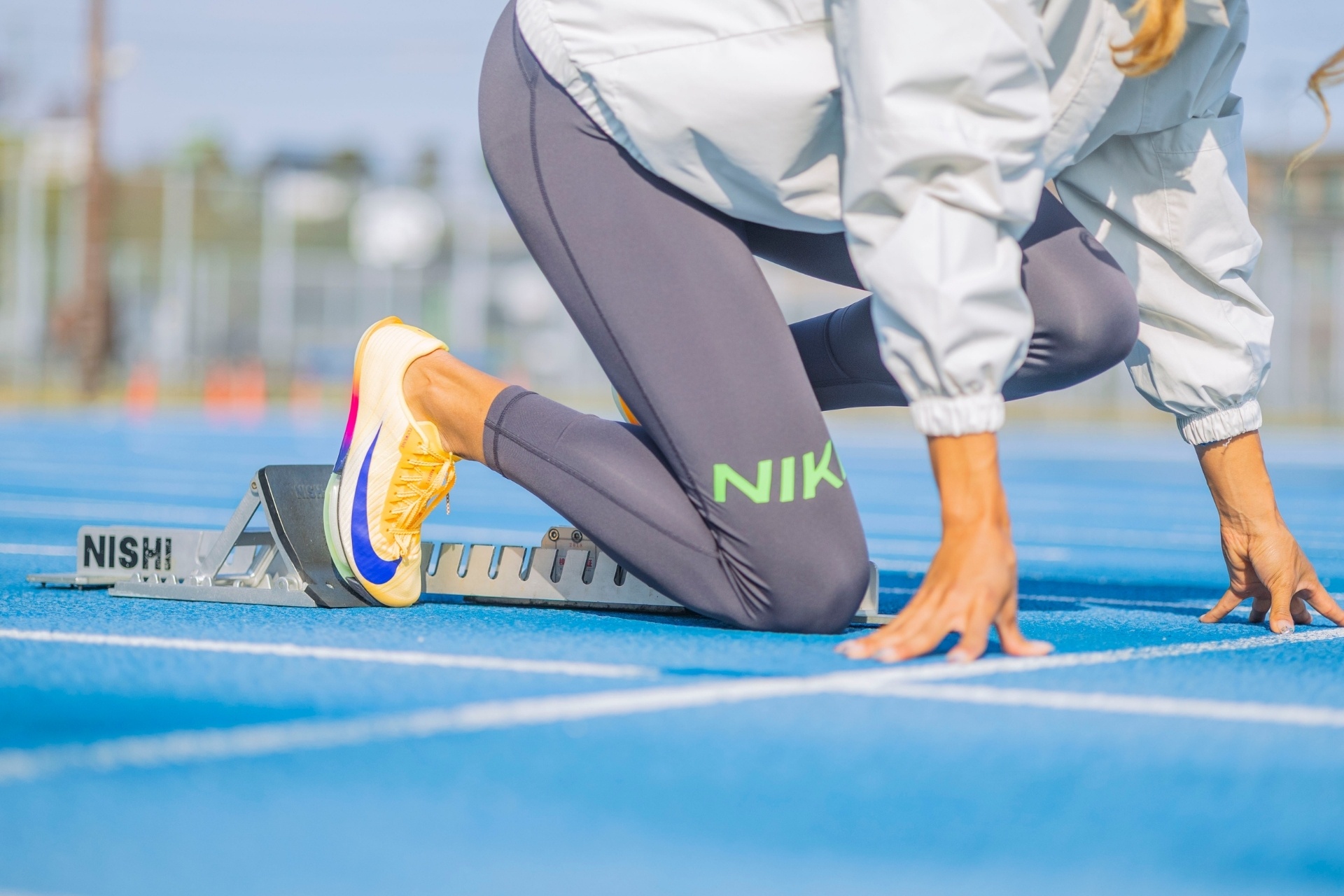
After excelling in both bobsleigh and track and field, you decided to focus solely on track once again.
“Through high school, university, and graduate school, I gained a wide range of experiences at each stage, which broadened my perspectives and helped me build confidence in myself. With that foundation, I felt I wanted to return to my roots and face track and field head-on once more. When you compete in international events, it truly makes you aware of the gap between yourself and the athletes at the very top. Even so, I don’t want to give up. Instead, I want to believe in myself and keep moving forward, thinking about what kind of physical conditioning I need, what kind of training I should do, and what mindset I should have in order to compete on the world stage.”
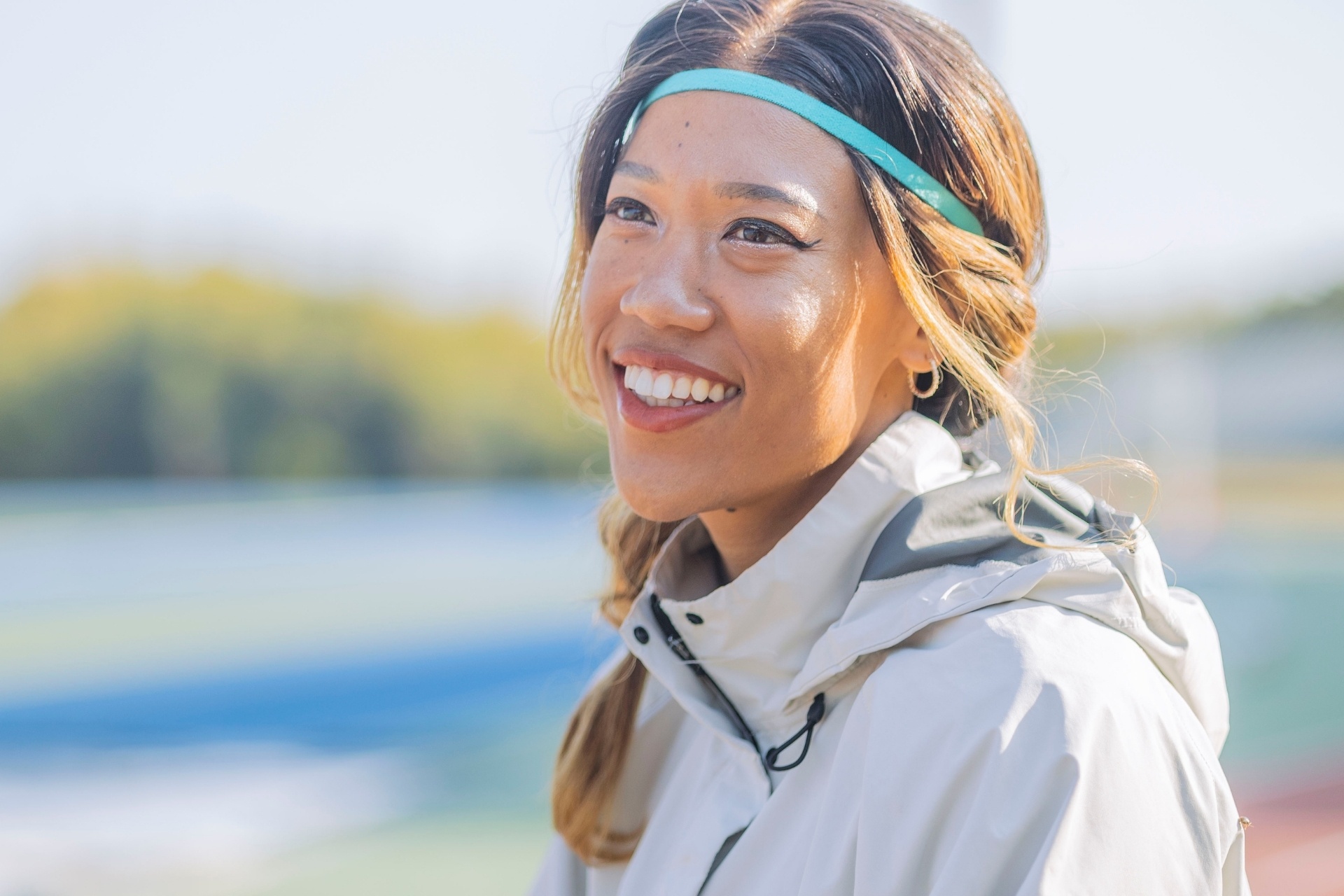
Ultimately, starting in 2022, you went on to win three consecutive titles in the women’s 100 meters at the Japanese Athletics Championships.
“I have competed in both the Summer and Winter World Championships, but I had hoped to advance to the Paris 2024 Olympic Games and the World Athletics Championships Tokyo 25 as my goals, but that didn’t happen. I’m filled with frustration.”
Even so, what continues to drive you to keep taking on new challenges?
“I think it’s the belief that I can still do more. In fact, there was a time in high school when I seriously considered quitting track and field. I had left my hometown, determined to devote everything to the sport, and moved all the way to a school in Saitama Prefecture, but then I suffered a stress fracture and couldn’t even train properly. While my classmates were succeeding one after another and going on to compete on the world stage, I felt like I couldn’t do anything. There were moments when I became so overwhelmed that I thought maybe I should just quit school altogether. But then I told myself, no, it’s still too early to give up. I had made the decision to master track and field, so I thought I keep at it a little longer.”
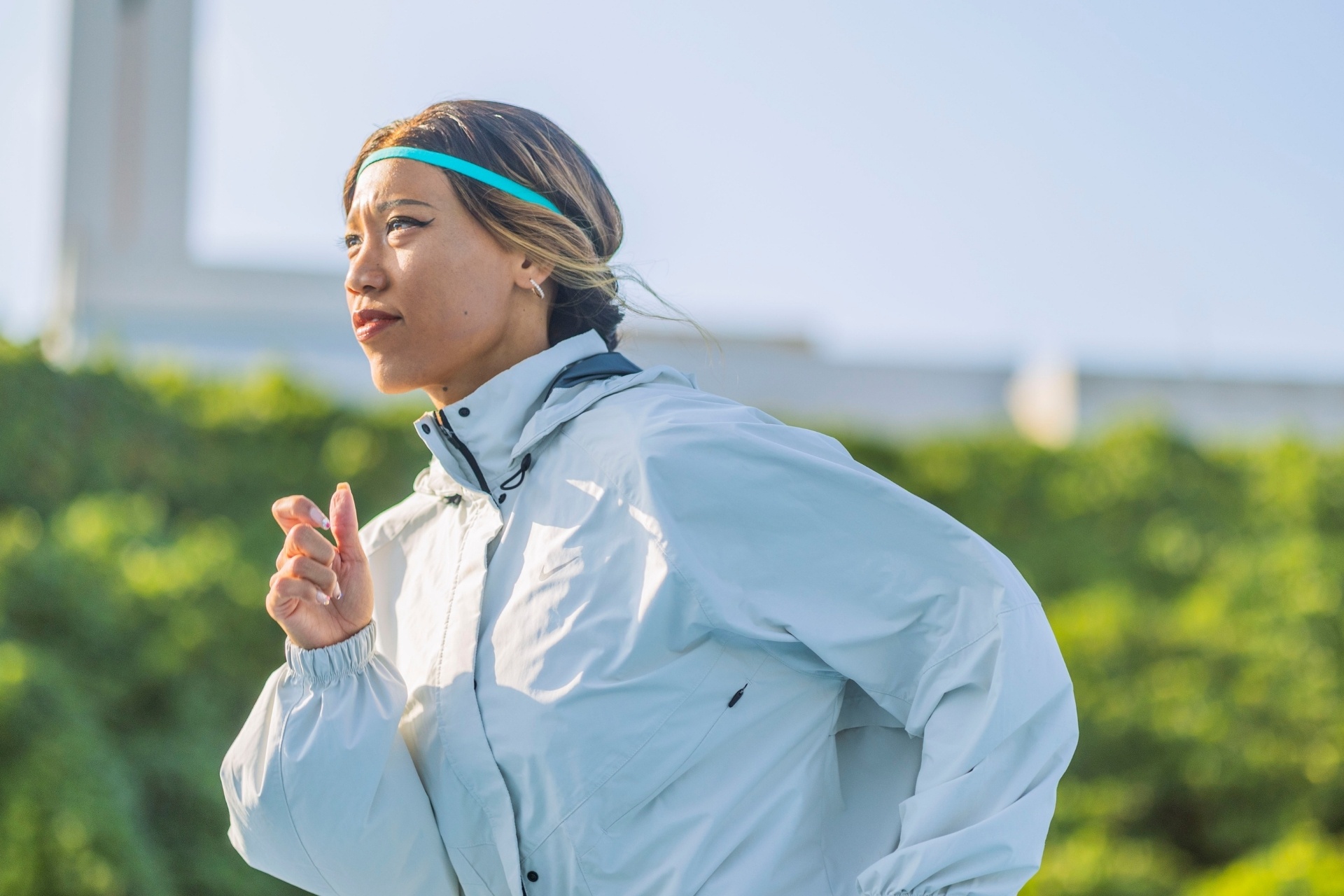
So you chose not to give up and trust the path you had selected.
“Yes. When you’re in a slump, it’s easy to look at others with jealousy, feel resentful, or get discouraged. But at times like that, instead of pointing your emotions outward, you have to turn them inward and reflect on yourself. During my university years, when I was struggling with injuries, my current coach once told me, ‘Let’s aim for the 10-second range together.’ Those words gave me confidence. At the time, my personal best wasn’t even at a level where I could competitive at the Japanese Athletics Championships. But hearing that from my coach suddenly made me think, ‘Maybe I actually have the potential to aim for 10 seconds!’ and I suddenly gained confidence. This is the path I chose, and there are people who support me and stand by me. All of my experiences up to now have become the driving force that keeps me going.”
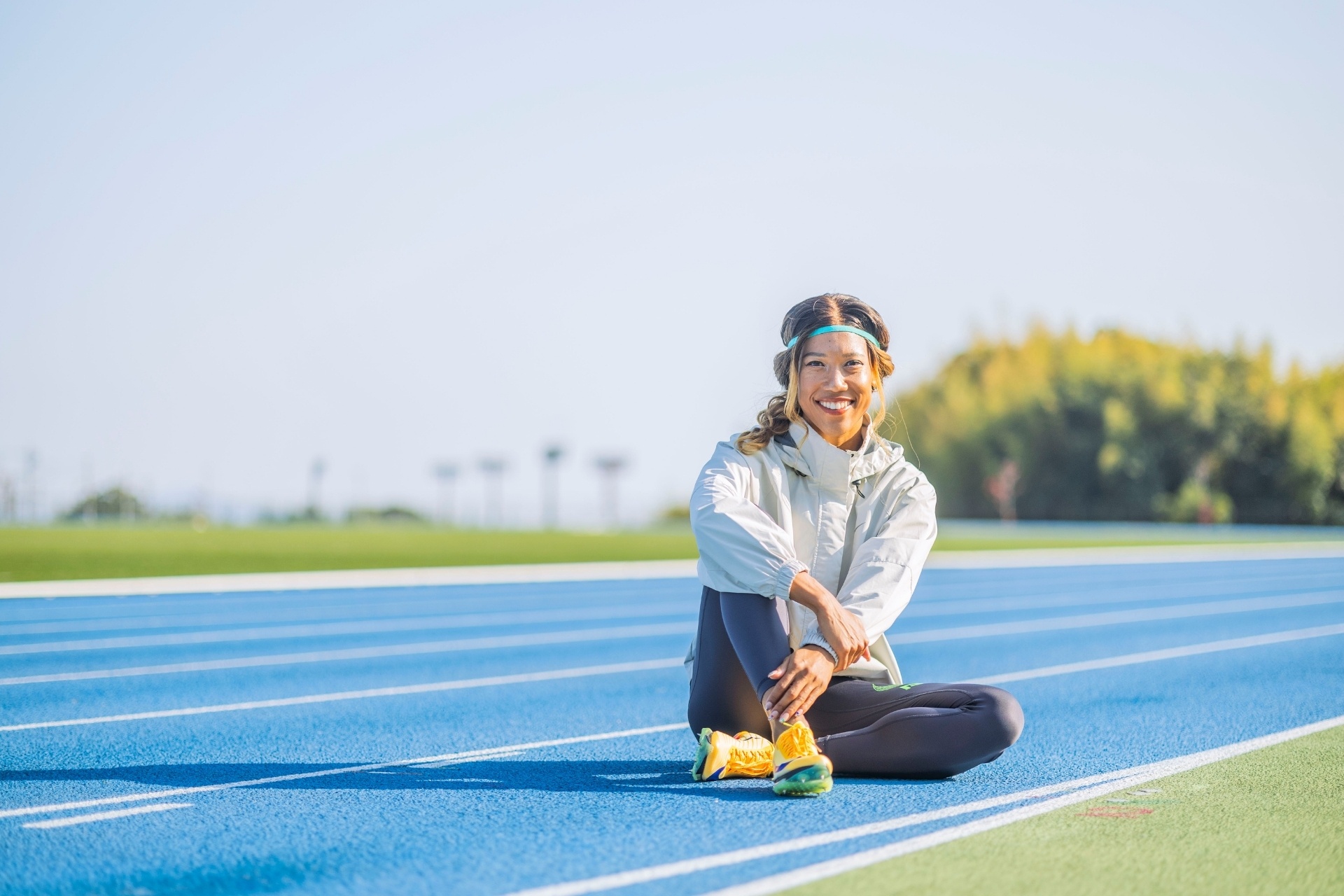
Please tell us about your current goals.
“My goals are to reclaim the title at the Japanese Athletics Championships, become the first Japanese woman to run in the 10-second range, compete at the 20th Asian Games Aichi-Nagoya 2026, and qualify for the Los Angeles 2028 Olympic Games. To achieve all that, I need to build a strong, injury-free body, strengthen the muscles that serve as my engine, and realize my best possible run. And after sticking to my daily training, all that remains is just to do my best and leave the rest to fate.”
Every year, the number of overseas tourists visiting Japan to watch sporting events continues to grow. Do you have any recommended spots you would like to share?
“I highly recommend Iwakuni City in Yamaguchi Prefecture, where I am currently based. Kintaikyo Bridge, with its rare structure measuring about 193 meters in length and about 5 meters in width, is designated as a national scenic spot. Another must-see is Iwakuni Shirohebi Shrine, which is believed to bring good fortune, financial luck, business prosperity, and traffic safety. It is the only shrine in Japan where you can see white snakes designated as a natural monument. Cute white snakes with red eyes welcome visitors. The area is rich in nature and the food is delicious, so I hope a lot of people will come and visit.”
<Profile>
KIMISHIMA Arisa
Born in 1995 and raised in Yamaguchi Prefecture. In her second year of junior high school, she won the girls’ 200 meters at the All-Japan Junior High School Track and Field Championships, setting what was then a national junior high school record. While studying at Nippon Sport Science University, she took part in a tryout and went on to represent Japan in bobsleigh, placing first at the European Cup in 2016. At the World Championships the following year, she achieved a seventh-place finish, becoming the first Japanese athlete of either gender to place in the top seven. At the Japanese Athletics Championships, she won three consecutive titles in the women’s 100 meters from 2022 to 2024, and also claimed back-to-back titles in the 200 meters in 2023 and 2024. At the World Athletics Championships Oregon 22, she helped set a new Japanese record as a member of the women’s 4×100-meter relay team. Her personal bests are 11.36 seconds in the 100 meters and 23.16 seconds in the 200 meters. She is currently affiliated with the C.E. Management Integrated Laboratory.