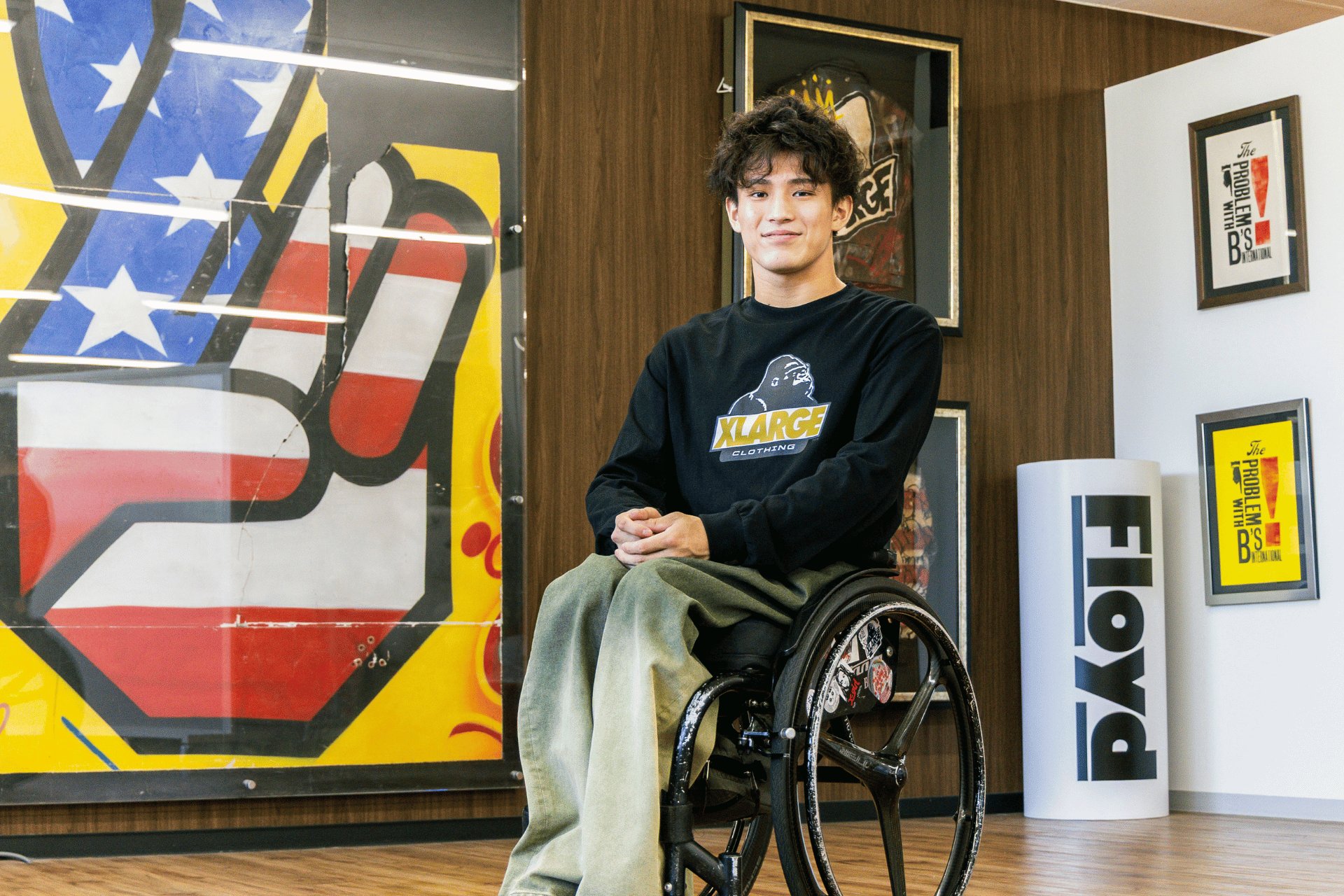
Itsuki Ito is an ace player on the Japanese national para ice hockey team. He started playing ice hockey before he even entered elementary school and practiced diligently until he was involved in a traffic accident when he was in the third grade of elementary school, leaving him paralyzed from the waist down. Just when he thought his dreams were over, he discovered para ice hockey. We spoke to Ito, who continues to take on the challenge of ice hockey despite his disability, about the appeal of the sport and his future goals.
Following this interview, at the 2025 World Para Ice Hockey Winter Games Qualification Tournament held in Jesheim, the Japan national team achieved a record of four wins and one loss, earning first place and securing their spot in the Milano Cortina 2026 Games.
In addition, Ito was selected as the Best Forward of the Tournament, showcasing an outstanding performance.
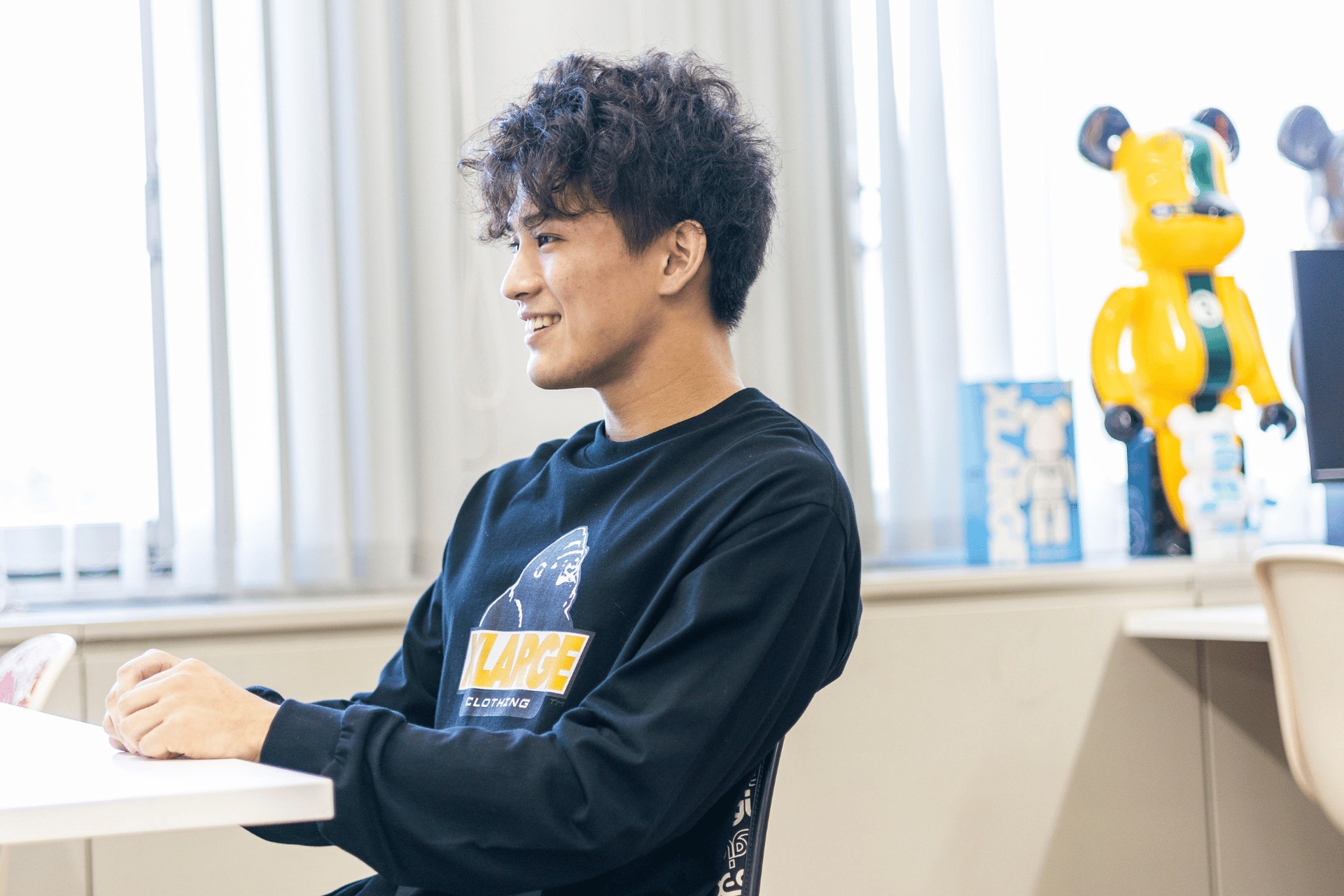
I’ve heard about how you started learning ice hockey even before you started elementary school.
“At my mother’s urging, I went to the skating rink with my sister and happened to see an ice hockey practice. Watching the players use their sticks to try to score points, I thought, ‘That looks fun!’ That was when I was six years old. I was also attracted by the fact that it’s a team sport where you aim to win together with your teammates, and I quickly became obsessed with hockey.”
Then you were in the third grade of elementary school, you suffered a serious spinal cord injury.
“I was in a traffic accident on my way to hockey practice. My family was worried about me and didn’t tell me about my injury right away. So I thought for sure I’d be able to play hockey again. But sooner or later you understand when you can’t move your legs on your own. I loved skating, and I couldn’t imagine not being able to skate on my own. I kept saying, ‘I wish it had been my hands instead of my legs that were injured.'”
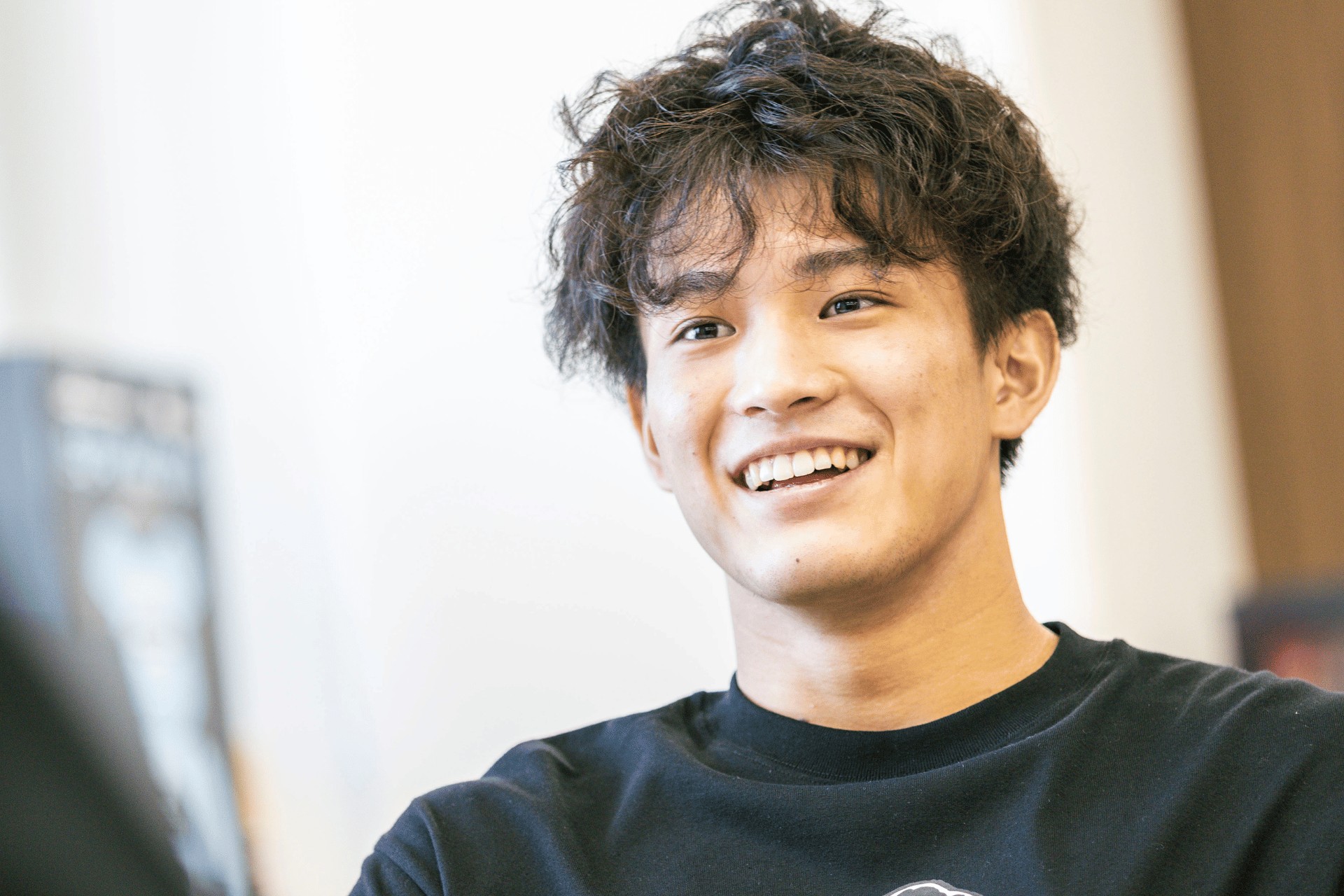
And it was during this time that you discovered para ice hockey.
“I tried various para sports, including wheelchair basketball, as part of my rehabilitation. Of course, I had known about para ice hockey from the beginning, but I was hesitant to give it a try because I thought I wouldn’t be able to skate like I used to, so I avoided it. Then, someone who used to be a coach for the Japanese national para ice hockey team invited me to come and watch practice. And when I got onto the ice for the first time in a while, I knew, ‘This is where I belong, where I should return to.’ All at once I was filled with emotion and I understood again that I really love the feeling, the atmosphere, and the time I spend on the ice.”
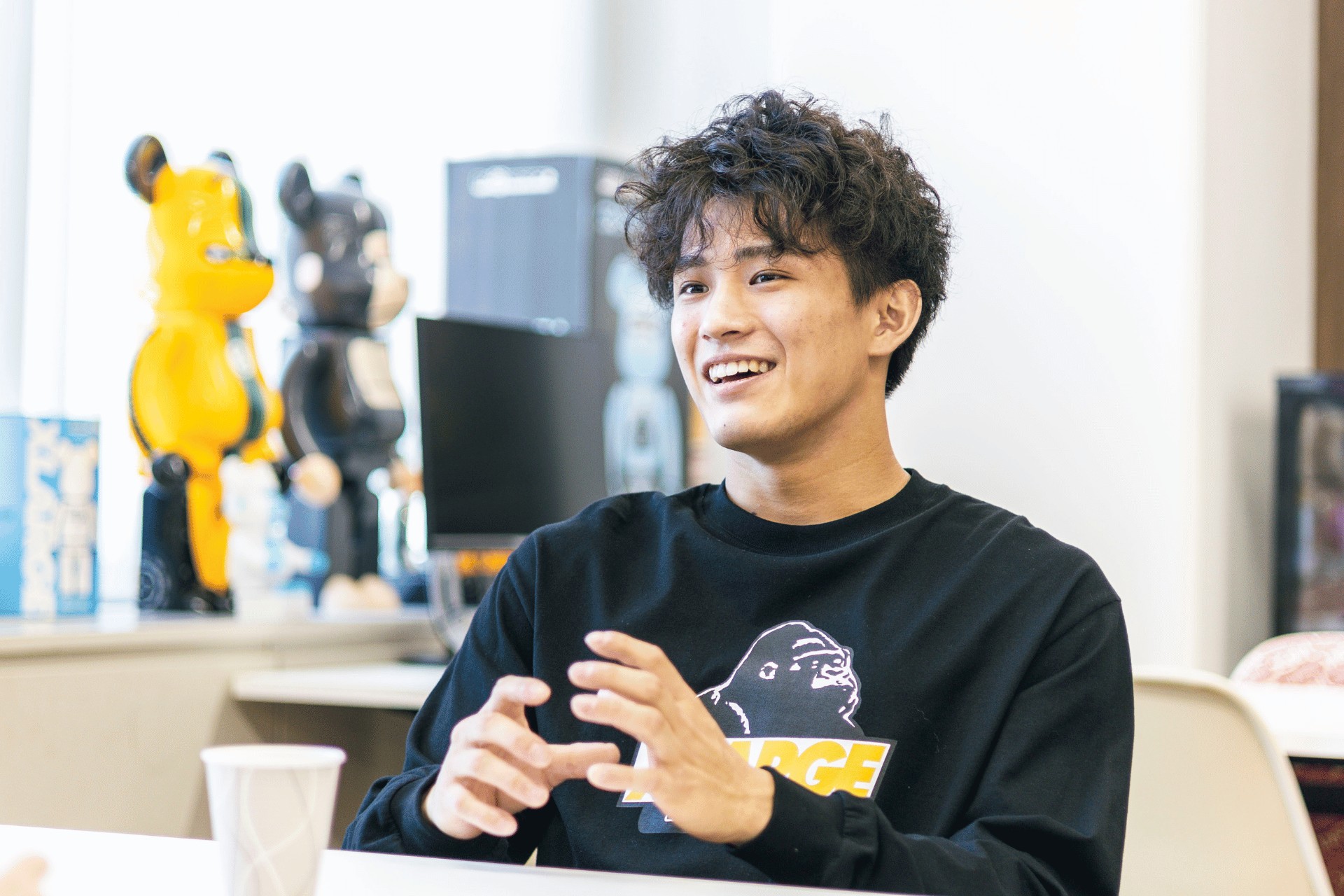
Even though it’s the same ice hockey, there are differences when it comes to para sports, right?
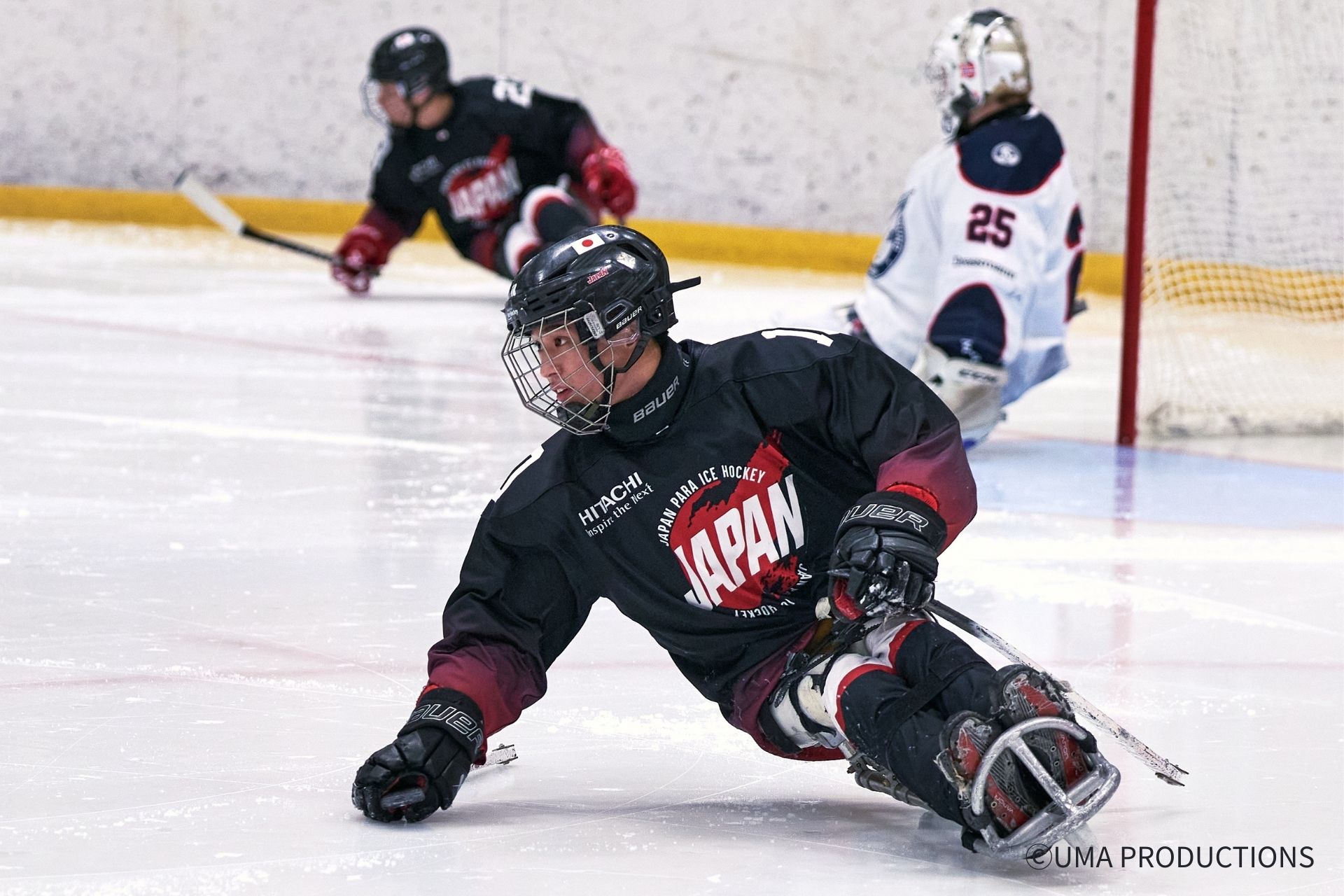
“In para ice hockey, instead of skates you ride a special sledge called a ‘sled’ in American English, and propel yourself over the ice using special sticks in each hand to glide around while scoring goals with the puck. What was most difficult for me, having played non-disabled ice hockey, was the difference in eye level. The puck would come flying towards your face. It was so scary. Of course it would hurt if it hit you, so I spent a lot of time practicing dodging pucks and my movements got faster (laughs).”
Ice hockey itself is such an intense sport that it’s been called “a martial art on ice.”
“Yes, and even though you’re disabled, there’s no mercy whatsoever. It’s so hard that it makes you wonder, ‘Is this really a sport for people with disabilities?’ I have a spinal cord injury which means I can’t use my core, and my condition is the most severe of all the players. But that doesn’t mean I get to join a special division or class based on the level of my disability, or that I get extra points. The sport is so hard I don’t even have time to think about the fact that I have a disability.”
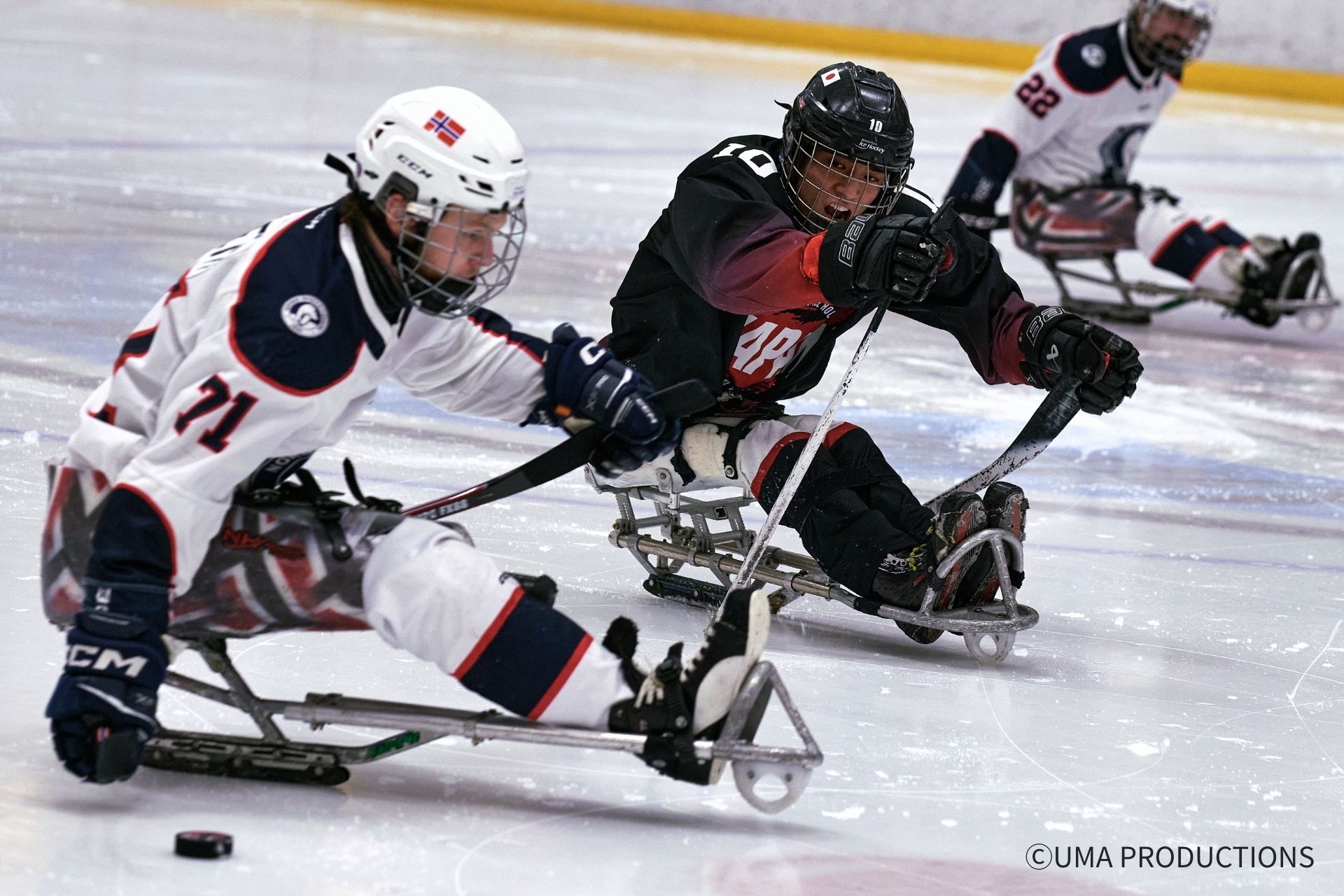
It must have taken a great deal of effort to compete with a major disability.
“The truth is, you can’t win with just physical strength or speed. That’s why you need another weapon. So I worked really hard to hone my dribbling, handling and puck-keeping skills. That’s why I’m now able to compete on the world stage as a member of the Japanese national team. If I had been able to move easily to begin with, I might not have thought about honing my skills to this extent. In the end, hockey is all I do. There was a time when I had no choice but to step away from ice hockey — yet in the end, it saved me. That’s what my life is all about.”
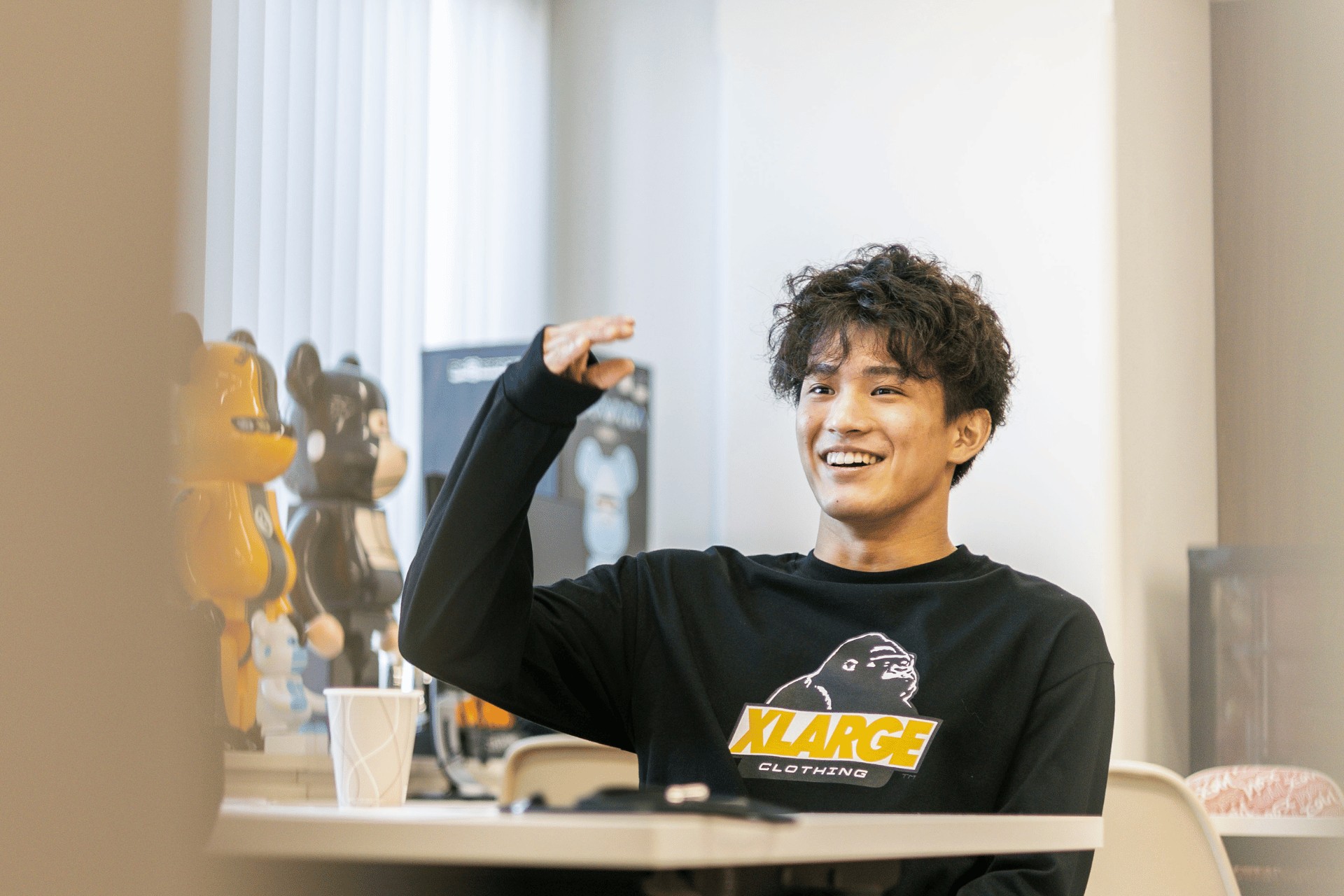
Your passion and hard work bore fruit, and you joined the Japanese national team while still a junior high school student. This shows the high expectations that the people around you had.
“At the time, I was the only child among adults. My seniors taught me schoolwork, and they also taught me a lot about how to be respected and loved as a junior member. For example, taking the initiative to clean the locker room. I’ve come to enjoy talking to people, regardless of age or position, and it’s thanks to the many people I’ve met since joining the national team.”
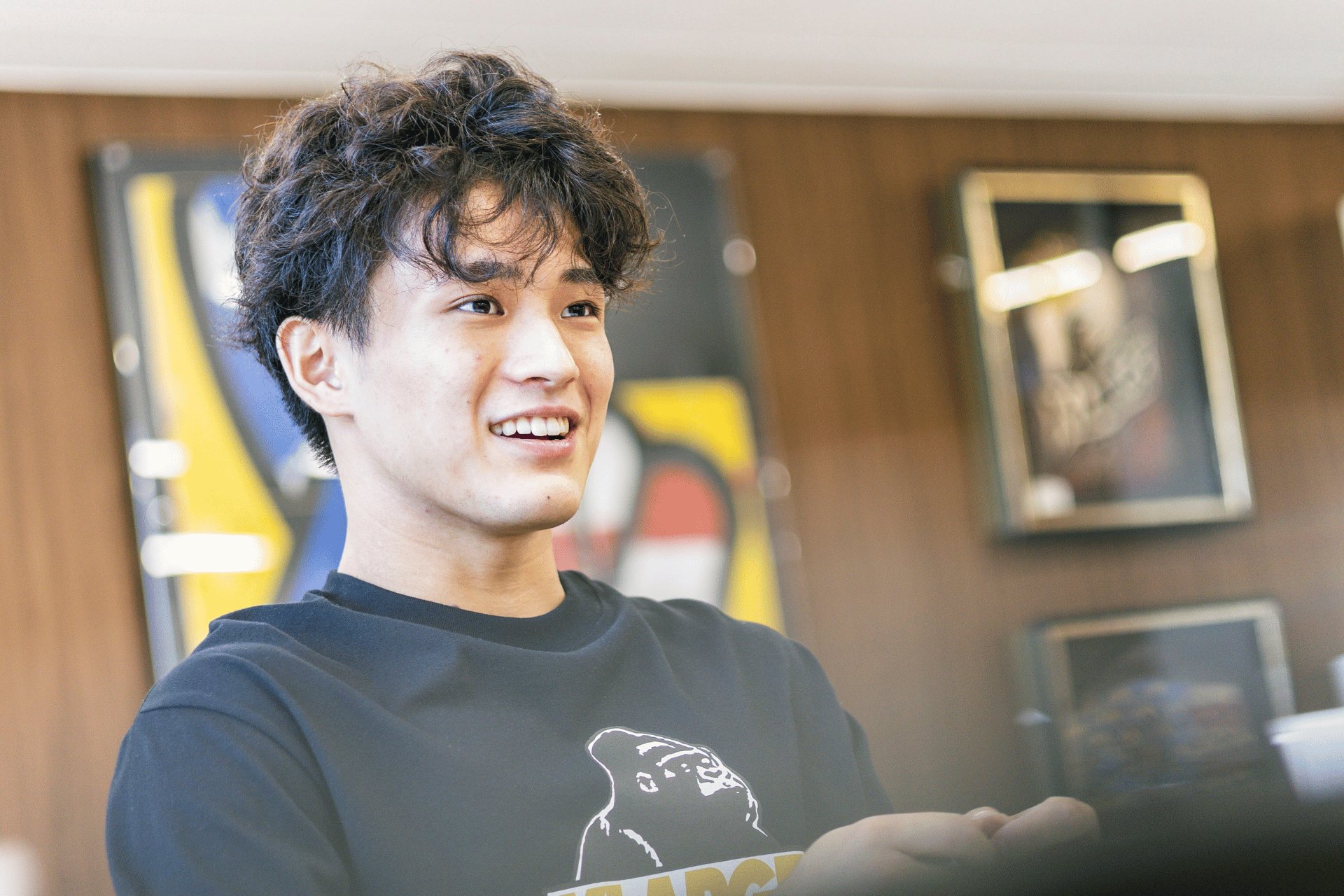
Last year, you traveled alone to North America, the home of ice hockey, and while attending a language school, you also participated in practice sessions with a strong local team.
“I had one goal: to play hockey with Declan Farmer, the undisputed ace of the US team. To me, Declan is like a god; I’ve admired him since I was in elementary school. Two years ago, when the US national team came to Japan, I had the chance to meet him for the first time. I was so happy that I told him, ‘I admire you, my dream is to play hockey with you, and I want to come to America someday,’ and he replied, ‘You are welcome anytime!’ I took his words to heart and travelled to Colorado, where he plays.”
What was it like actually playing with someone you admire?
“I was moved. Not only his play style, but everything else about him was godlike! His hairstyle, clothes, manners, and the way he interacts with people were all perfect. Above all, he welcomed me, someone who had followed him all the way from Japan, and we even went camping together on the days we had off from practice. He even told me, ‘Itsuki, you are my friend.'”
It must have been a meaningful time for you.
“Yes. I was very inspired and faced with the reality that there are barriers to competing against the world’s best, but on the other hand, I gained confidence that the skills I have honed, such as dribbling, are good enough to compete on the world stage. In addition, I was able to clearly see my challenges: improving my physique, speed, and shooting ability so that I can compete against bigger overseas players. The best thing I gained from this experience was that Declan telling me, ‘Let’s go to Milan (Milano Cortina 2026 Paralympic Winter Games) together!’ I want to make that promise a reality no matter what.”
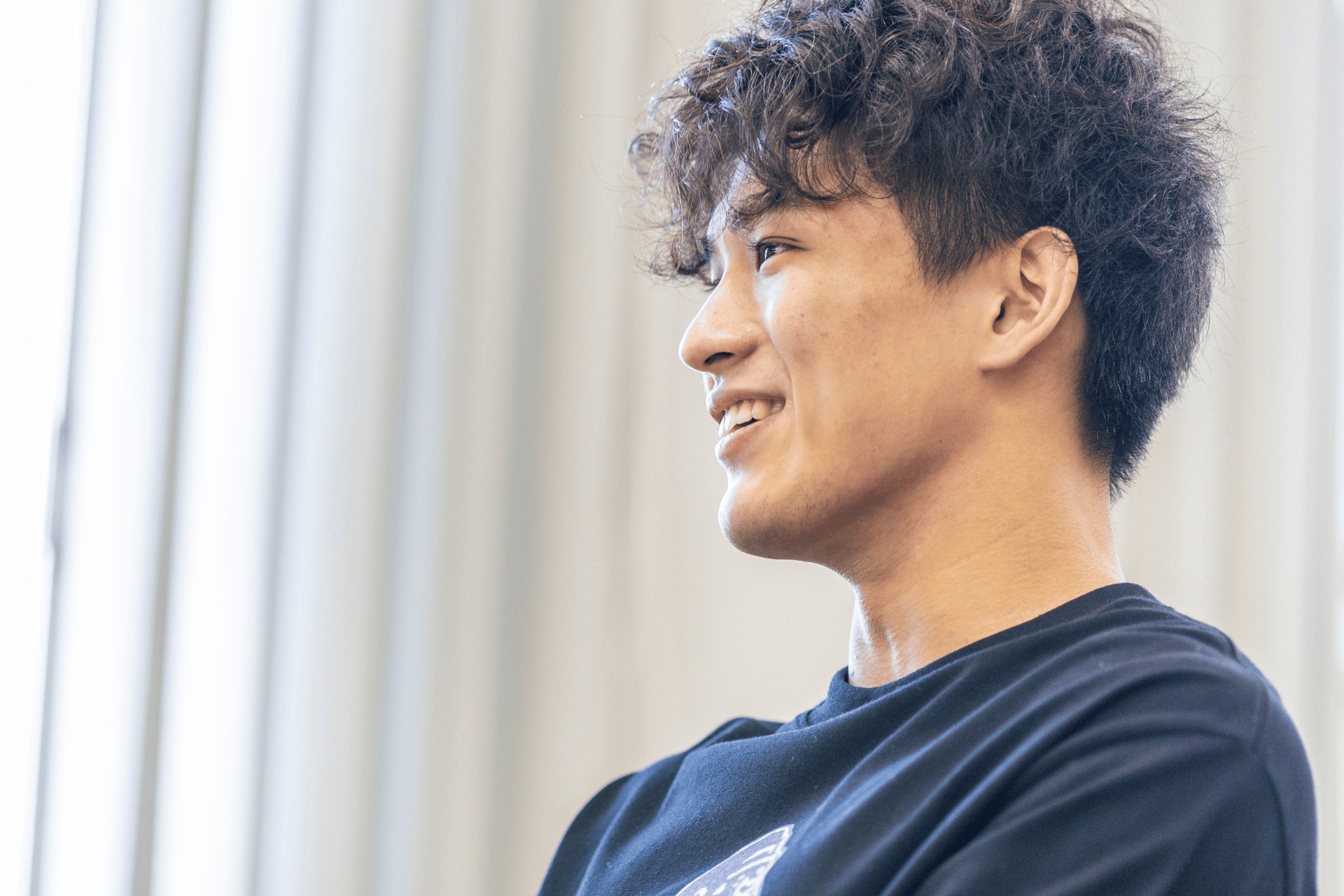
Ito was unable to compete in the qualifying rounds for the 13th Winter Paralympic Games (Beijing 2022) due to age restrictions. However, his disqualification in the final qualifying round raises expectations for next year’s Milano Cortina 2026.
“Over the past four years, all the members of the Japanese national team have sacrificed many things and devoted themselves to ice hockey. I don’t want to think that all that effort will be for nothing. But whatever the outcome, all I can do now is enjoy playing to the fullest, while being grateful that I discovered ice hockey and that I’m still able to play the sport. That’s all there is to it.”
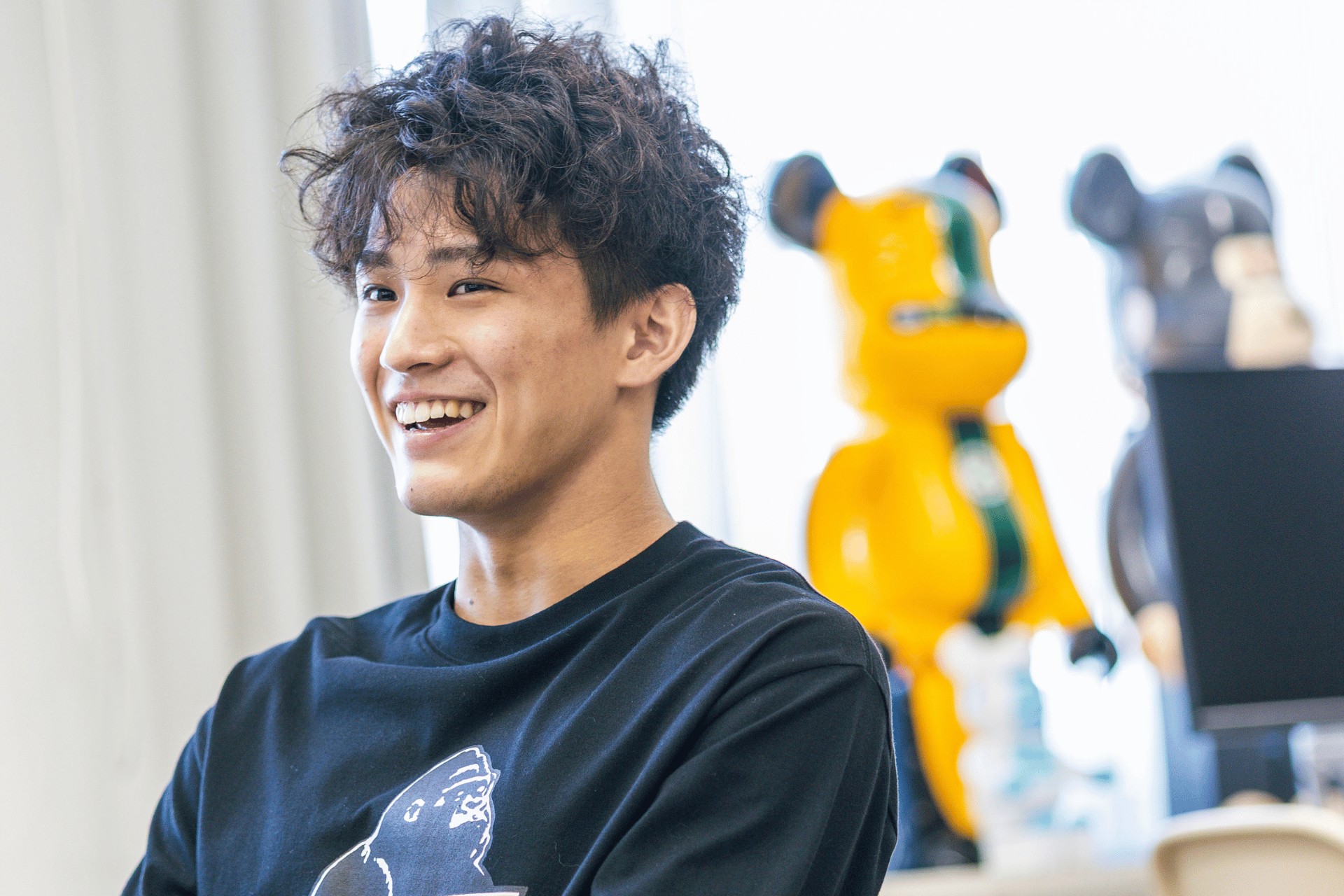
You’d love for more people to see these athletes play and see their passion, right?
“It’s thrilling to watch these passionate athletes, even those with disabilities, compete for the puck with all their might and aim for the goal, unafraid of injury. The 34th Para Ice Hockey National Championship was held on December 6th and 7th. The venue was Tokyo Tatsumi Ice Arena, a Tokyo Metropolitan ice rink that was just completed in September this year. Many spectators came to see the players competing in heated matches in this new rink.”
Are there any tourist spots you would recommend to people coming to watch the games?
“I recommend Lake Suwa, which spans Okaya City, Suwa City, and other nearby areas in Nagano Prefecture. The Japanese national para ice hockey team has a training camp in Okaya City, so I go there two or three times a month. The view from the hilltop at night, with the lake surrounded by the city lights, is particularly beautiful. It’s a little far from Tokyo, but if you have the time, I definitely recommend checking it out.”
<Profile>
Itsuki ITO
Born in Osaka Prefecture in 2005. He started playing ice hockey at the age of six. In the third grade of elementary school, he was involved in a traffic accident that injured his spinal cord and left him with disabilities in both legs. He began playing para ice hockey in the fourth grade of elementary school, and was selected to represent Japan in the first year of junior high school. He won the B-Pool title at the 2023 World Para Ice Hockey Championships and was named MVP of the tournament. He is attracting attention as a young ace who will lead Japanese para ice hockey. He is a member of ROSPADA KANSAI and B's INTERNATIONAL.